AI Receptionist for Multi-Location Businesses: Routing
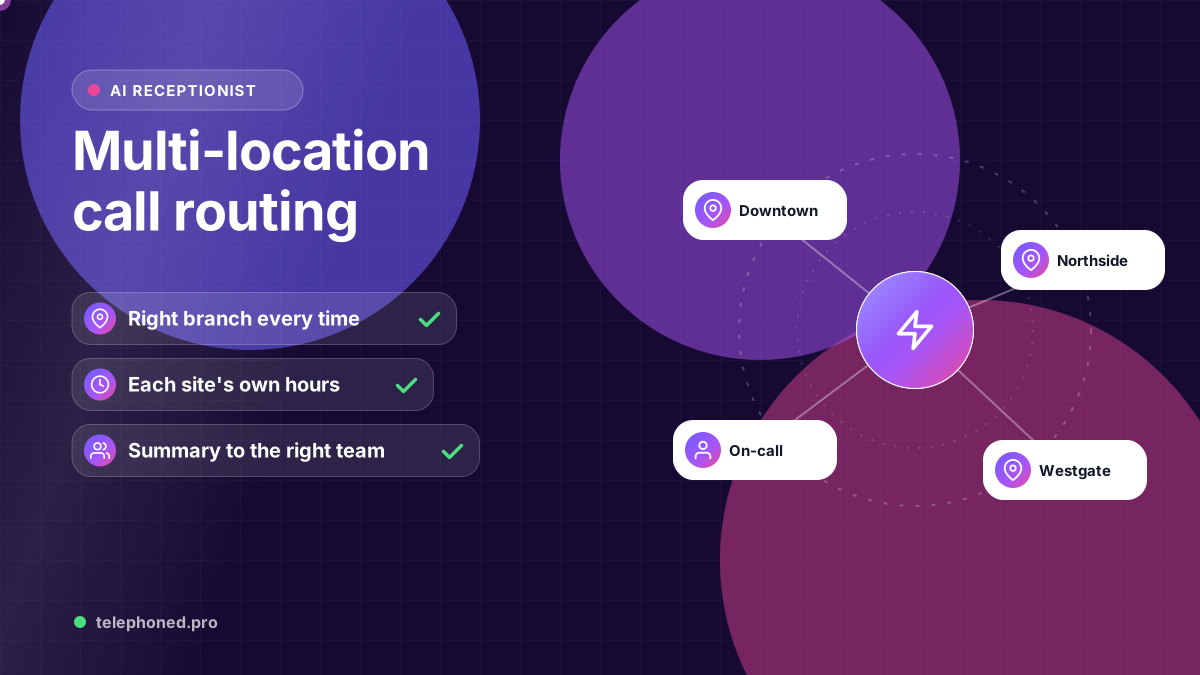
How an AI receptionist routes calls across several locations: by number, ZIP code or caller choice, with each site’s hours, calendar and on-call contact.
Read the guide →AI Receptionist
Voicemail or an AI receptionist after hours? See what each caller actually experiences, why callbacks go unanswered, and which calls need a live answer.
For the wider workflow, explore Compare AI Receptionist Options. For a related operating question, read AI Receptionist vs IVR Phone Tree: What Callers Notice.
AI-assisted editorial guide from Telephoned.pro, a provider of AI receptionist services. Call-screening figures come from a 2020 Pew Research Center survey and lead-response figures from a 2011 Harvard Business Review study, both cited below. Caller scenarios are illustrative, not customer results.
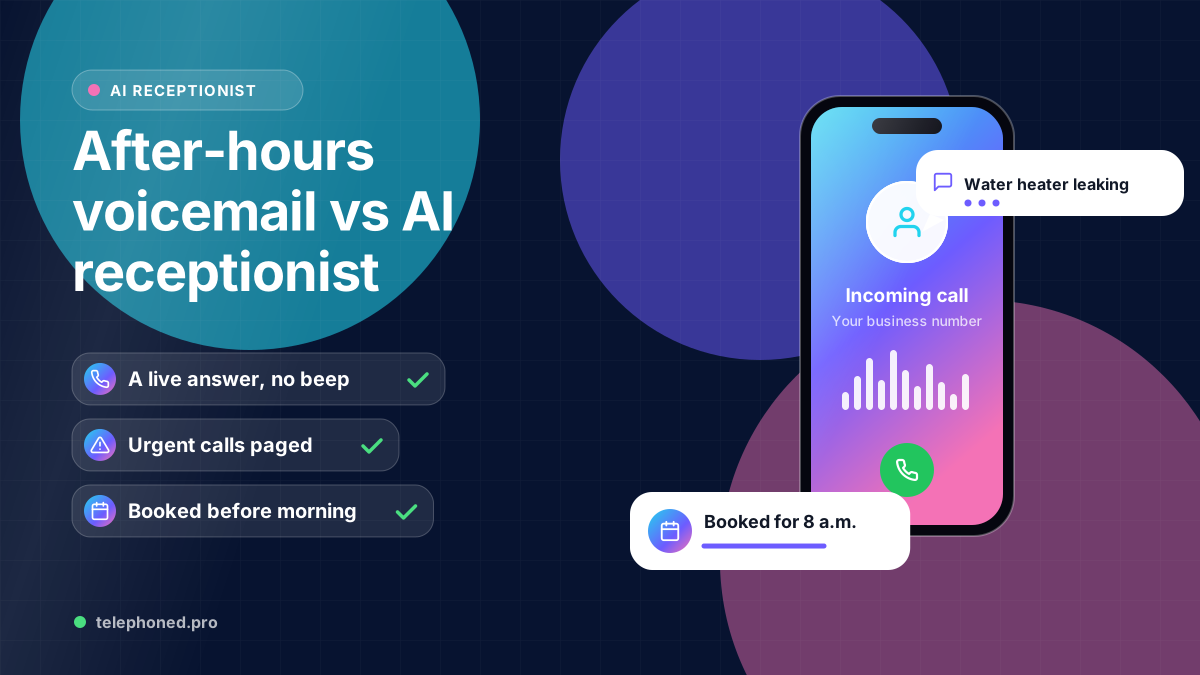
With after-hours voicemail, a caller hears a beep, leaves a message if they bother, and waits until morning for a callback they may not pick up. With an AI receptionist, the same caller gets an answer, a booked appointment or an urgent page to whoever is on call, and a text confirming what happens next. The difference is not the technology; it is whether the caller’s problem is handled tonight or left for tomorrow.
Voicemail is free and familiar, and for some businesses it is enough. This guide walks through what a caller actually experiences with each option, why the morning callback is weaker than it looks, and how to decide which calls deserve a live answer. If you already know you want nights covered, our after-hours answering service page shows how it is set up.
The Pew numbers matter for anyone relying on callbacks. When you return a voicemail at 8 a.m., your number is probably unknown to the caller, so only about one in five people say they generally answer. Most will let it ring and check for a message, which turns one missed call into a round of phone tag.
| Moment | After-hours voicemail | AI receptionist |
|---|---|---|
| First seconds | A greeting and a beep | A spoken greeting that asks how it can help |
| Explaining the problem | One take, no questions back | A short conversation with follow-up questions |
| Urgent issue | Greeting may give an emergency number to dial | Recognizes urgency and pages or transfers to on-call |
| Booking | Not possible until someone calls back | Can book routine visits where a calendar connection is set up |
| After the call | Silence until the morning | A text or email confirming what happens next |
| Next morning | Staff listen, call back and often reach voicemail | Staff read a summary and the booking is already made |
Picture a homeowner in Atlanta at 9:40 p.m. whose water heater is leaking into the garage. With voicemail, they leave a rushed message, then search for another plumber while they wait. With an AI receptionist, they describe the leak, are asked whether water is near anything electrical, and the on-call plumber is paged within minutes. Our article on an AI receptionist for plumbers covers that urgency screening in more detail.
“Voicemail tells a caller to wait. Most callers with a real problem won’t.”
Bring one real scenario to your demo. We will review the intended next step, existing systems and human handoffs.
Book a free demo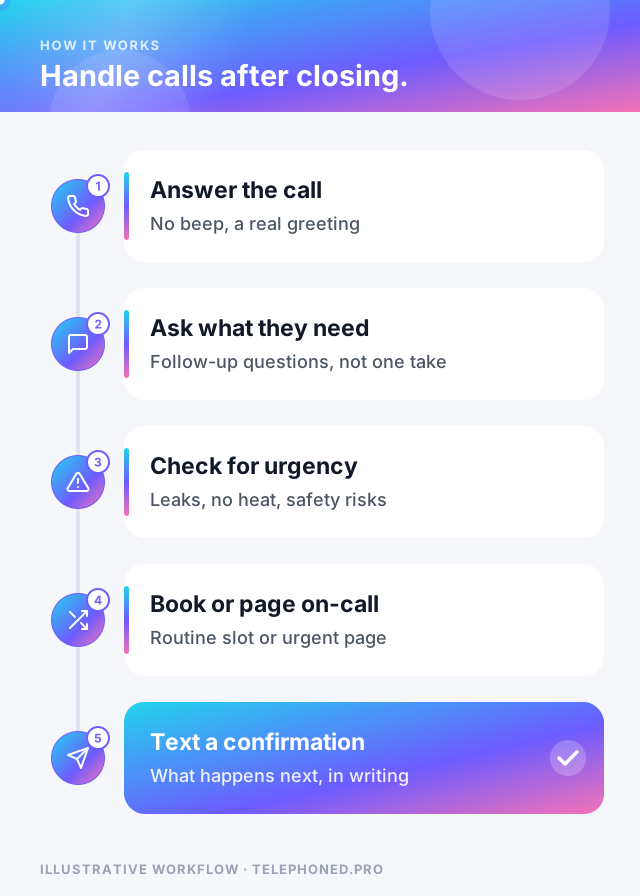
Voicemail can be fine if after-hours calls are rare, nothing you do is ever urgent, and your customers are existing clients who expect a next-day reply. A bookkeeper or a B2B supplier with a few evening calls a week may not need more. Even then, a missed-call text back that replies instantly can stop callers from moving on to the next business on the list.
If you keep voicemail, make the greeting do more work. Say when you will call back, give a number or text line for urgent problems, and ask callers to leave their address and the best time to reach them. A clear greeting will not book the job, but it cuts the phone tag the next morning.
Most businesses keep their existing number and forward unanswered calls, which our guide to forwarding business calls explains step by step. For the week-by-week schedule after that, see the first 30 days rollout plan.
An AI receptionist can only book, page or transfer within the rules and connections you set up. If nobody is on call, it can take details and set expectations, but it cannot send a technician. It may mishear names or addresses, so it should read key details back. And for true emergencies, such as fire, gas or medical danger, callers should always be told to call 911 first.
Keep reading
Bring one real workflow. We will show you how calls, follow-up and scheduling could connect for your business.
Keep exploring
The services and decisions that connect to this page.