01
Routine maintenance
Capture the service need and location, check the territory, then offer an eligible appointment only if scheduling is connected and availability is confirmed.
AI receptionist · US HVAC companies
Telephoned.pro helps HVAC businesses connect incoming service inquiries with structured intake, follow-up and scheduling. Build the flow around your actual service territory, staffed hours and dispatch process.Bring an after-hours no-cooling call and a routine maintenance request to your demo. Check what the caller hears, what the dispatcher receives and what happens when no appointment or staff member is available.
For the wider workflow beyond the call, explore industry intake and operations automation.
Review AI Receptionist for Home Services: Never Miss a Job Call. A related guide to check alongside this page is AI Phone Answering Service for US Businesses, 24/7.
HVAC, automated
The busiest night of summer, handled. 1:00
A flow for heating and cooling
A homeowner calling about no cooling during a heat wave needs a different next step from someone asking about a seasonal tune-up. Capture the request in the caller’s own words, then use the business’s approved routing rules.
For US HVAC operations, intake often includes the service address, ZIP code, callback number, whether the caller is an existing customer and the requested service. Keep those details separate from a technical diagnosis: an intake conversation should not pretend to know what failed.
Match the workflow to your territory and capacity. Confirm the supported phone routing, dispatch tools and calendar connections during the demo; the flow shown here is a planning framework, not a claim that every field-service platform is already connected.
Three calls to bring
Capture the service need and location, check the territory, then offer an eligible appointment only if scheduling is connected and availability is confirmed.
Record the issue and requested contact window. Explain when the staffed team will review it and follow the business’s approved escalation rules.
Preserve the existing appointment or job context. Route a change or follow-up to the right team without opening another unrelated request.
From caller to dispatcher
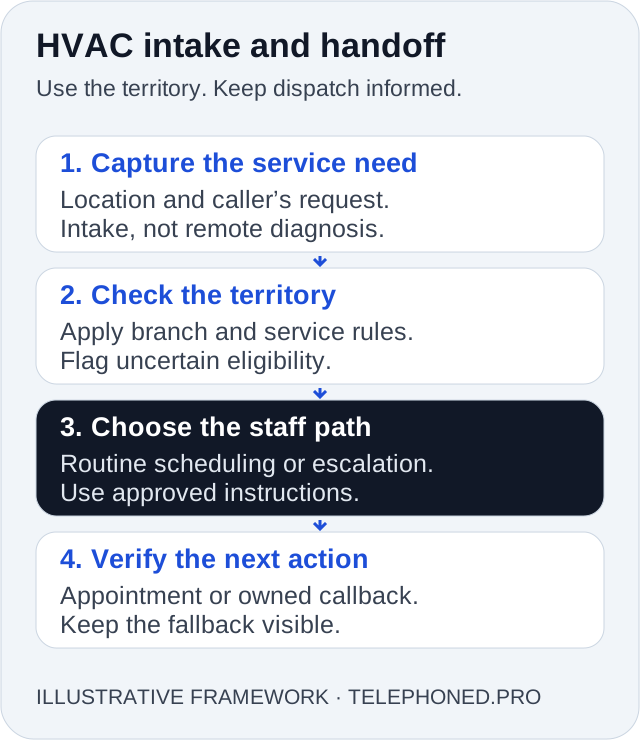
Keep the facts Record the address or ZIP code, callback details and caller’s description. Flag missing or conflicting information.
Use the territory Apply the territory and service rules your team maintains. Send unclear cases for review before offering a visit.
Choose the path Keep routine scheduling separate from the approved urgent or specialist handoff. Do not turn intake into remote diagnosis.
Close the loop A confirmed visit needs an accepted calendar record. A callback needs an owner and due window; failed transfers need a backup.
See the workflow
Secure your spot and bring your service territory, staffed hours and one difficult inquiry. Explore the intake record, callback ownership and scheduling fallback.
US operating details
A multi-branch HVAC company may have different coverage in Central and Mountain time. Keep the service location, responsible branch and customer’s requested callback window together so staff do not interpret the time incorrectly.
Seasonal demand changes the workload. Define when the system should record a callback rather than offering an appointment, who reviews the queue and how an unaccepted task moves to the backup owner.
If a caller reports a possible safety issue, follow your approved safety and escalation instructions. The receptionist should not invent troubleshooting advice, guarantee immediate dispatch or substitute for emergency services.
Bring one routine request and one exception. Review existing-number forwarding where supported, plus AI transparency.
Call handling
For a no-heat call or a no-cool request during a heat wave, capture the service address, callback number, system type if known, symptoms and urgency in the caller’s own words. Apply the emergency criteria your HVAC team approves rather than diagnosing a fault.
Calls that meet those criteria escalate to your on-call technician or designated contact. Agree the backup when a transfer goes unanswered and what the caller should expect next. An escalation is not a promise of technician availability or an arrival time.
Call handling
Separate a routine tune-up or maintenance-agreement inquiry from an urgent repair. Capture whether the caller is an existing customer or agreement holder, the system type and the requested service, then apply your approved booking and eligibility rules.
Book maintenance only into the calendar capacity you make available. Confirm how the existing field-service software, calendar and CRM fit the workflow during discovery; do not assume every platform or maintenance-agreement lookup is supported.
Call handling
Before seasonal peaks, review service-area boundaries, staffing, booking capacity and the on-call rota. Define which calls can book routine work and which need an urgent handoff when the office is busy. Use the same intake questions for every request so dispatch receives the address, system information and urgency.
Teams that also handle plumbing can capture the service needed and route plumbing inquiries to the appropriate person. Keep the qualification questions and escalation rules specific to each trade rather than treating every home-service call as the same job.
Before the demo
It can support intake and the next-action workflow where configured. Agree on what information is captured, when staff respond and how the approved escalation path works. After-hours intake does not guarantee technician availability.
Check the service address against your maintained territory rules. If the address is unclear or outside the area, explain the approved next step without promising a visit.
Use the business’s approved categories and human escalation rules. Do not ask intake automation to diagnose equipment or invent safety instructions.
Bring the software and workflows your team uses. Ask which connections are supported for your setup and request a demonstration of the normal path and a failed update.
Trace a routine maintenance call, an after-hours request and an unavailable dispatcher. Check the intake record, current owner, caller expectation and evidence for any confirmed appointment.
The receptionist captures the caller’s address, callback details, symptoms and urgency, then applies your approved criteria. Qualifying calls go to the on-call technician or designated contact, with a fallback when nobody answers. It does not diagnose the system or promise an arrival time.
Routine visits can follow your agreed calendar and booking rules. Capture agreement status and the requested service, and confirm any required verification or software connection during setup before promising that the booking is complete.
Review coverage hours, service areas, appointment capacity and on-call contacts before the first cold snap or a summer heat wave. Test an urgent handoff and a fully booked calendar so the caller receives an accurate next step.
Want to hear it on your own calls?
Secure your spotSecure your spot to explore how intake, service-area checks, staff follow-up and scheduling could fit your team.
Keep exploring
The services and decisions that connect to this page.