US business call workflows
AI receptionist for roofing companies
with a clear next action.
An AI receptionist for roofing companies captures roof inquiries, checks your service area, separates inspection requests from existing-project calls and routes urgent concerns to your approved team. Telephoned.pro connects that first conversation with the next owned action. Inspection scheduling depends on your actual availability and rules; answering a storm-related call does not establish that the roof is safe or that repairs are scheduled.
Review AI Receptionist for Home Services: Never Miss a Job Call. A related guide to check alongside this page is AI Receptionist for Cleaning Services.
Workflow review
Handle storm-week inquiries without inventing availability
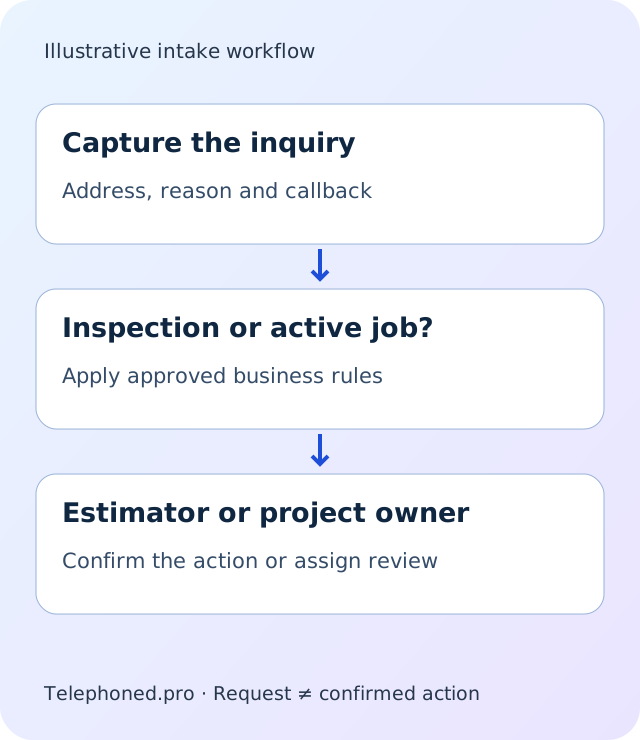
Illustrative scenario: a homeowner calls after a storm and wants someone to inspect missing shingles. Your estimator is on a roof and the office is handling existing projects. The useful first response captures the property address, callback number, reported problem and whether the caller is asking about a new inspection or an active job. It does not estimate damage from a phone description or promise a repair crew.
Storm inquiries can look similar while requiring different next steps. A request for a replacement estimate, a report of water entering the property and a customer asking about an already scheduled installation should not all become new sales appointments. Define those paths with your team. Where there may be immediate danger, use only your approved safety and escalation language rather than improvising technical advice.
Workflow review
Build a roofing-specific inspection intake
Begin with the location and the reason for the call. Confirm whether the property is within your operating area and whether the request concerns residential or commercial work, according to the categories you actually serve. Ask for a concise description of the issue and the caller's relationship to the property where relevant. Avoid promising an insurance outcome or asking the assistant to determine coverage.
Separate the inquiry into the correct queue: new inspection, estimate follow-up, existing installation, warranty concern or billing question. Existing projects need their current owner and history. A new inspection needs your approved qualification rules, appointment duration and estimator availability. If those rules cannot resolve the request, capture it for review instead of placing an unsuitable slot on the calendar.
Confirm a booking only after the destination calendar accepts it. A requested inspection time is not an accepted appointment. If access arrangements or an estimator's review are required first, say so clearly. The record should include the property, reported concern, relevant access notes and agreed next action, so an estimator can prepare without a second round of basic questions.
Your call flow
Review a normal request and an exception
Bring your current tools and operating rules. We will distinguish confirmed actions from requests that need your team.
Workflow review
Keep roof safety and project decisions with your staff
The assistant should not ask a caller to climb onto a roof, assess structural safety or diagnose the cause of a leak. Your team supplies the instructions for urgent reports and decides when a qualified person must take over. Ask to hear the exact response to a caller describing water near electrical equipment or damage that they believe is dangerous. Operational boundaries should be visible in the demonstration.
An on-call or project-manager transfer needs a fallback when nobody answers. Decide whether another approved contact is tried or a callback request is assigned. Do not imply that a tarp, inspection or emergency repair is confirmed merely because the call was captured. Weather, access and crew availability may need human review. Keep that distinction clear in both the caller's summary and the internal record.
Review this workflow with your team.
Bring one routine request and one exception. Review existing-number forwarding where supported, plus AI transparency.
Workflow review
Check the details before choosing roofing phone automation
Bring your service map, inspection types, staffed hours and current estimating process. Explain which requests your office can book directly and which need a project manager. If different crews or branches serve different areas, specify how ownership is assigned. A shared inbox without an accountable next step can leave the same problem in place even when every call receives an answer.
Ask the demo to show a new storm inquiry, a routine replacement estimate, a customer calling about an installation already underway and a request outside your area. Include a calendar conflict and a failed transfer. Inspect the resulting task or customer record. Confirm that the assistant has not created a duplicate estimate, promised a project date or changed an existing commitment without permission.
Bring the actual CRM or roofing platform as a dependency to validate. Confirm the account actions available, the required permissions and how changes are reconciled. Do not treat a general integration claim as confirmation that a particular inspection or project workflow will work. Sensitive documents and customer records can stay out of the initial demo; fictional examples are sufficient.
Workflow review
Connect inspection intake with estimate follow-up
A phone inquiry is one stage in a roofing sales process. An inspection request may become a confirmed visit, then a proposal and eventually an accepted project. Keep those stages separate. A customer who has already accepted or declined should not continue receiving an unchanged estimate follow-up. A staff reply should be visible to the workflow before another message is sent.
Evaluate a narrow starting scope around the gap you can identify today. That may be overflow capture while estimators are working, a clearer owner for storm inquiries or fewer manual handoffs between the office and sales. Use verified outcomes from your own records to assess it. No call-answering setup can promise project wins, safe roofs or a particular response time without the operating process to support those commitments.
Review instructions when your service territory, estimator roster or storm-response process changes. A named maintainer should check the new routing and scheduling paths before those instructions are used with callers.
Before you decide
Questions about the proposed setup
No. It captures approved intake details and routes the request. Damage assessment, safety judgments and repair decisions stay with qualified staff.
Scheduling can follow your approved inspection rules where a supported calendar connection is verified. Confirmed appointments must be distinguished from requests awaiting review.
They should be identified and routed to the current project owner rather than automatically creating another sales inquiry.
Want to hear it on your own calls?
Secure your spotReview the workflow
around your business.
Bring a typical call and one exception. We will explore the right scope, dependencies and staff handoffs before you decide.