US business call workflows
AI receptionist for cleaning services
with a clear next action.
An AI receptionist for cleaning services captures property and service requirements, separates new quote requests from existing bookings and follows your approved scheduling and escalation rules. Telephoned.pro scopes that intake around the way your cleaning business works. It does not promise a final quote, crew assignment or access arrangement unless the relevant business process actually confirms it.
Review AI Receptionist for Home Services: Never Miss a Job Call. A related guide to check alongside this page is AI Receptionist for Electricians.
Workflow review
A cleaning inquiry needs the right service definition
Illustrative scenario: a property manager calls about a move-out clean while your office is coordinating regular residential visits. The caller needs a different scope from a recurring housekeeping customer. Useful intake establishes the property, requested service and timing, then routes the inquiry to the person or process that can confirm the details. It should not invent a fixed quote from an incomplete description.
Distinguish residential, commercial, turnover and specialist work according to the services you actually provide. Your business may require an inspection, photographs submitted through an approved channel or a staff review before confirming scope. The assistant should explain that next step rather than presenting every request as an immediately bookable standard clean.
Workflow review
Design the cleaning-service intake and booking path
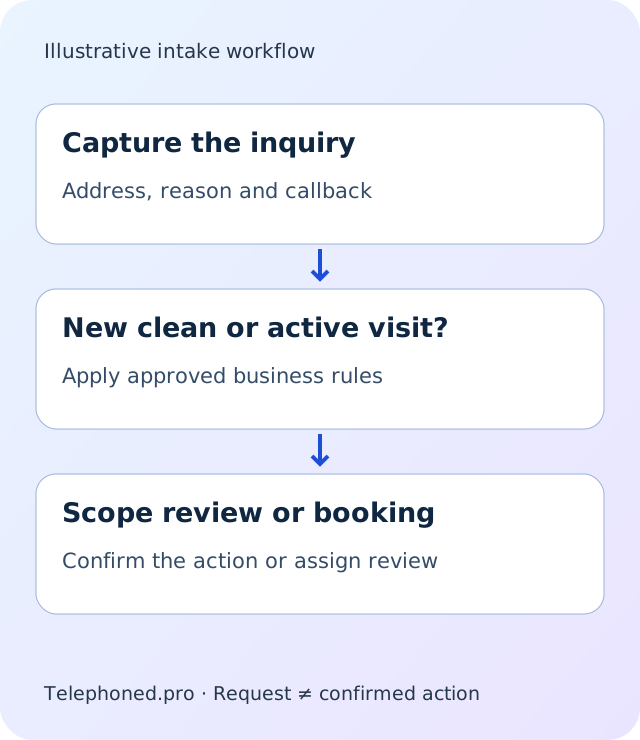
Capture the caller's name, callback preference, property location and reason for the call. Ask whether the request is new or concerns an existing appointment. For a new inquiry, use your approved questions about service type, relevant property characteristics and preferred timing. Collect only what your team needs to decide the next action; do not request door codes or other sensitive access details during a general inquiry.
Check service area and eligibility before discussing scheduling. A recurring service, one-time deep clean and commercial site visit can require different durations, staff and approval. If the scope is uncertain, offer the appropriate review or quote request. Do not place an unsuitable service on the calendar merely because the requested time appears empty.
For existing appointments, identify the current booking and preserve its owner. A reschedule or cancellation should update the authorized record only after the action is confirmed. If a calendar write fails, describe the change as pending and assign a person to resolve it. The caller and office should receive the same account of what was requested and what actually completed.
Your call flow
Review a normal request and an exception
Bring your current tools and operating rules. We will distinguish confirmed actions from requests that need your team.
Workflow review
Keep access and service problems with the responsible team
A caller may report that a crew cannot enter, a key is unavailable or a service did not meet expectations. Those are operational exceptions, not new sales leads. Establish the approved routing for the current job and make sure the office can see the request with its context. Avoid exposing access instructions to an unverified caller or storing sensitive details in unnecessary places.
Your team also decides which requests need a supervisor, such as property damage, a disputed scope or a potentially hazardous condition. The assistant can capture the issue and follow the escalation instructions. It should not make liability decisions, promise compensation or provide specialist cleaning advice beyond approved wording. An unanswered transfer needs an accurate fallback and a named next owner.
Review this workflow with your team.
Bring one routine request and one exception. Review existing-number forwarding where supported, plus AI transparency.
Workflow review
What to check before buying a cleaning receptionist setup
Bring your service categories, coverage map, scheduling rules and existing-customer process. Explain how your office decides whether a request can be booked directly or needs review. Include the difference between an appointment for a quote and an appointment for the cleaning itself. If different locations or crews serve different work, make the assignment dependency explicit.
Test a recurring customer changing a visit, a new deep-clean inquiry, a commercial walkthrough request and an out-of-area caller. Add an access problem and a service complaint. Ask to inspect the saved records and any notifications. Check that the assistant has not quoted an unsupported amount, disclosed private access information or created a duplicate booking.
Confirm the exact calendar or cleaning-management account actions required. Supported connections, permissions and exception handling must be validated before implementation. A general integration label does not establish that the assistant can safely cancel a visit or assign a crew. Use fictional properties and accounts for the demonstration so you can review the workflow without sharing private client information.
Workflow review
Give every request a clear next action
After intake, the outcome may be a confirmed appointment, a quote review, a supervisor callback or an unresolved request awaiting an owner. Keep those statuses separate. If a customer replies to a reminder or speaks with the office, follow-up should use the current state rather than continue an unchanged sequence. An answered call is useful only when the operational handoff is also clear.
Start with one inquiry type that your team can review consistently. Overflow capture or new quote intake can be evaluated without replacing the people who already coordinate your work. Review whether the right details were captured, the correct owner received the request and the customer understood the next step. Use actual account evidence to judge outcomes rather than assumed conversion figures.
Bring an ordinary booking and an exception to discovery. We can discuss where routine intake belongs in a wider workflow of records, scheduling and follow-up. Your staff retains control of access, scope and service decisions, with the automated steps limited to the rules and connections that have been agreed and tested.
Before you decide
Questions about the proposed setup
Only approved information and rules should be used. Requests needing a property or scope review should be routed to staff rather than receiving an invented quote.
That action depends on verified account permissions and scheduling rules. A requested change must not be described as completed until the system confirms it.
General intake should not request sensitive access details unnecessarily. Agree a separate approved access process with the responsible team.
Want to hear it on your own calls?
Secure your spotReview the workflow
around your business.
Bring a typical call and one exception. We will explore the right scope, dependencies and staff handoffs before you decide.