Best AI Voice for a Virtual Receptionist: What to Test
The best AI receptionist voice isn't the fanciest. Learn what makes callers trust an AI voice, how to test it in a demo, and whether it should say it's AI.
Read the guide →AI Receptionist
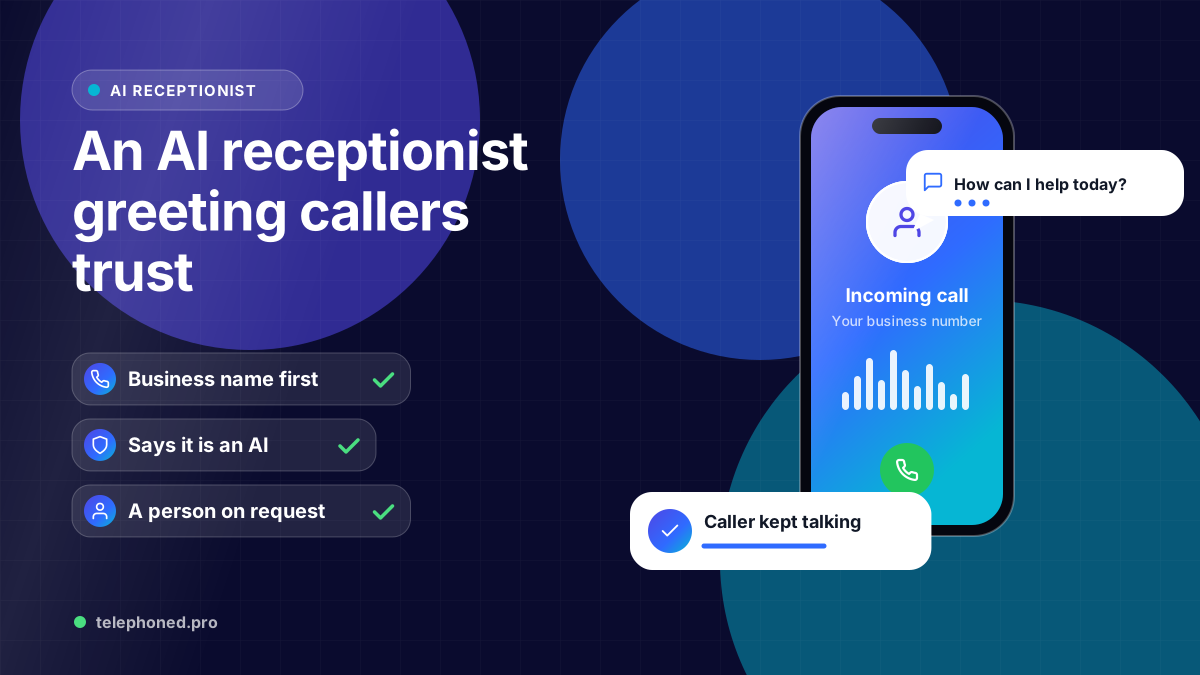
Write an AI receptionist greeting callers trust: name the business, say it’s an AI, offer a person and ask one question. With examples you can copy.
For the wider workflow, explore AI Receptionist for Business: 24/7 Answering & Booking. For a related operating question, read After-Hours Voicemail vs AI Receptionist: What Callers Get.
AI-assisted editorial guide from Telephoned.pro, a provider of AI receptionist services. Attitude figures come from a June 2025 Pew Research Center survey, cited below. Greeting examples are illustrative templates, not customer scripts, and this article is not legal advice.
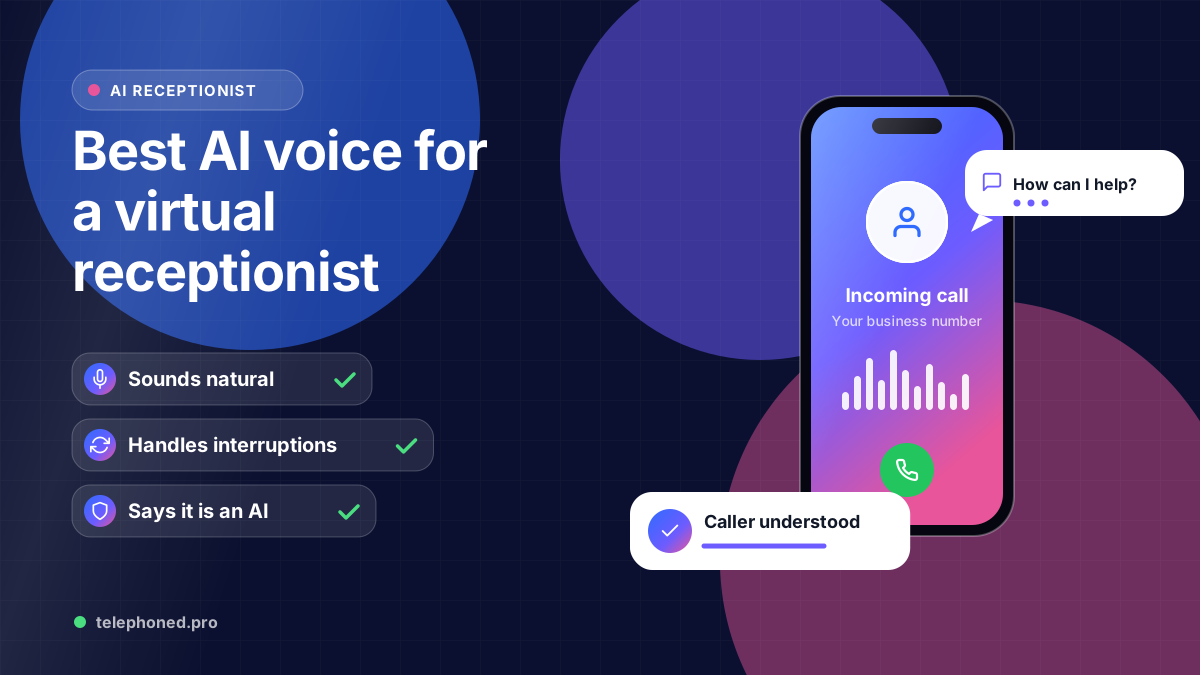
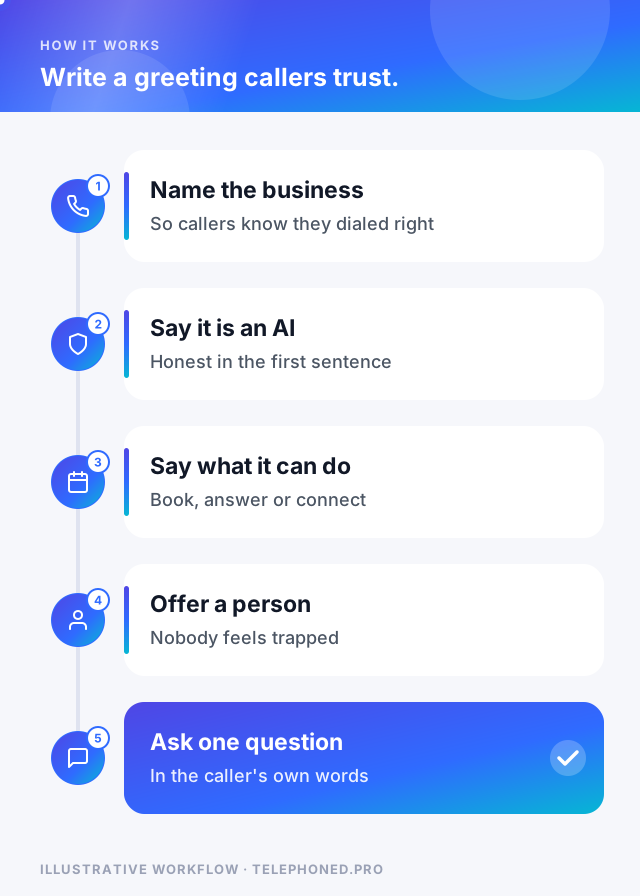
A greeting callers trust does four things in under ten seconds: it names your business, says plainly that they are speaking with an AI assistant, tells them a person is available if they need one, and asks one open question. For example: “Thanks for calling Riverside Plumbing. I’m the AI assistant, and I can book a visit or get you to our team. What’s going on today?”
That is the whole formula. The rest of this guide explains why each part matters, gives greetings you can adapt for after hours, busy seasons and urgent calls, and lists the phrases that make callers hang up. If you want the full conversation after the greeting, our call script templates pick up where this leaves off.
Those numbers explain why the greeting matters so much. Half of your callers start out wary of AI, and that share has grown. A greeting that hides the AI, or sounds like a sales pitch, confirms the worry. A greeting that is honest, short and helpful gives them a reason to keep talking.
| Part | Why it matters | Example wording |
|---|---|---|
| Business name | Confirms the caller reached the right place | “Thanks for calling Riverside Plumbing.” |
| AI disclosure | Honest from the start, so nobody feels tricked later | “I’m the AI assistant.” |
| What it can do | Sets expectations in one breath | “I can book a visit or answer questions.” |
| A way to a person | Removes the fear of being stuck | “or get you to our team.” |
| One open question | Lets callers explain in their own words | “What’s going on today?” |
“Callers forgive an AI that is honest. They don’t forgive one that pretends to be a person.”
Rules vary by state and by how the system is used. California, for example, has a bot-disclosure law (Business and Professions Code section 17941) aimed at bots that try to sell or persuade while hiding that they are bots; whether it reaches your phone line is a question for your attorney. Legal or not, disclosing up front is the safer and more trusted choice, and it costs you four words.
Disclosure also changes how callers talk. People who know they are speaking with an AI tend to state their need more directly, which helps the assistant route the call. Our comparison of an AI receptionist vs an IVR phone tree shows why a plain question works better than a menu.
Bring one real scenario to your demo. We will review the intended next step, existing systems and human handoffs.
Book a free demoPicture a homeowner in Minneapolis calling a heating company at 10 p.m. in January because the furnace stopped. The after-hours greeting tells them in one breath that the office is closed, that they are talking to an AI, and that urgent problems reach the on-call technician. They don’t have to wonder whether leaving a message will help, which is the problem with after-hours voicemail.
Call it yourself from a mobile phone, in a car and somewhere noisy. Time it: if it runs past ten seconds, cut words. Ask two people who don’t work for you whether they understood they were talking to an AI and how to reach a person. Then listen to the first week of real calls for callers who repeat “hello?” or ask for a human straight away, which usually means the greeting is too long or too vague.
A greeting earns a caller’s patience, but it cannot make up for what comes next. If the assistant can’t book, can’t reach a person or misunderstands the request, trust drops quickly. The voice matters too; our guide to the best AI voice for a virtual receptionist covers what to listen for. Review greetings whenever your hours, services or recording practices change.
Keep reading
Bring one real workflow. We will show you how calls, follow-up and scheduling could connect for your business.
Keep exploring
The services and decisions that connect to this page.