AI Receptionist Service-Area Qualification Before Booking
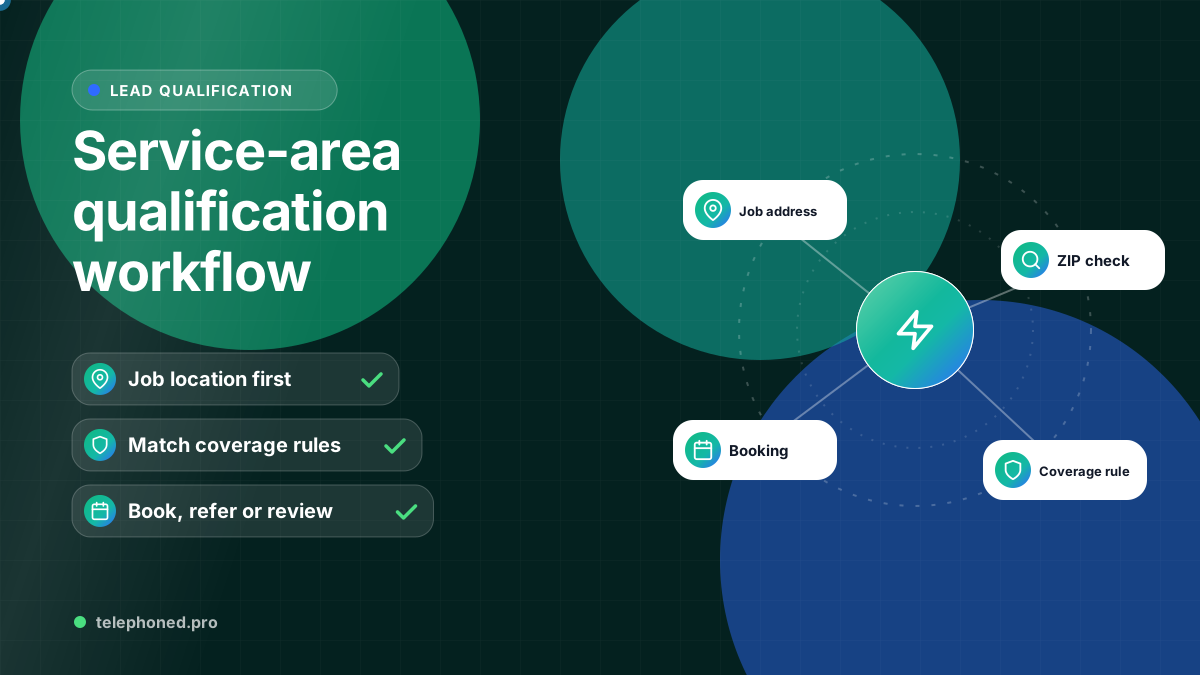
Build a service-area qualification workflow that checks location before an AI receptionist offers an appointment, while routing uncertain and out-of-area inquiries correctly.
Read the guide →AI Receptionist
The 8 questions that turn a ringing phone into a booked, profitable job: service area, urgency, safety, decision-maker and timing, plus what to skip.
For the wider workflow, explore Business Process Automation Services. For a related operating question, read AI Receptionist Service-Area Checks Before Booking.
AI-assisted editorial guide from Telephoned.pro, a provider of AI receptionist services. Response-time figures come from a 2011 Harvard Business Review study; safety and contractor guidance comes from PHMSA and the FTC, cited below. Call examples are illustrative, and every question set is configured and approved by the business.
The best lead qualification questions for a home service call are short and practical: where the job is, what is wrong, how urgent it is, whether anyone is unsafe, who can approve the work, and when someone can be there. Ask those in that order and almost every caller ends the call either booked into the right slot, routed to an on-call tech, or politely told you are not the right fit, all within about two minutes.
Qualification is not about grilling people. It protects your schedule from jobs outside your area, gets emergencies to a person fast, and gives the technician what they need before they roll a truck. This guide lists the questions that matter for plumbing, HVAC, electrical and roofing calls, the order to ask them in, and what an AI receptionist for home services should never try to answer on its own.
That study looked at web leads rather than phone calls, but the lesson carries over: interest fades quickly. A homeowner with water on the floor will call the next company on the list if nobody qualifies and books them now. Answering every call and asking the right questions in the first minute is what keeps the job yours.
| Question | Why it matters | What to do with the answer |
|---|---|---|
| What is the address or ZIP code for the job? | Confirms you serve the area and sets drive time | Out of area: say so kindly and offer a referral if you have one |
| What's going on, in your own words? | Matches the job type to the right tech and skill | Save the description word for word for the technician |
| Is anyone in danger right now? | Spots gas, electrical and flooding hazards | Give your safety instruction first, then escalate |
| Is this an emergency, or can it wait for a scheduled visit? | Separates after-hours dispatch from routine booking | Emergency: page on-call. Routine: offer slots |
| Do you own the home, or should we speak with the owner or manager? | Repairs and replacements need someone who can approve them | Collect the owner or property manager contact |
| What equipment is involved, and roughly how old is it? | Helps the tech bring the right parts | Note brand, model and age if known; never guess |
| When can someone be home to let us in? | Avoids no-access trips | Book a window the calendar actually has |
| What's the best number and email for updates? | Confirmations and on-the-way texts need it | Read it back to confirm |
Eight questions sounds like a lot, but most take a few seconds, and a good flow skips what the caller already said. If someone opens with “I’m at 412 Elm and my water heater is leaking,” the address and problem are done.
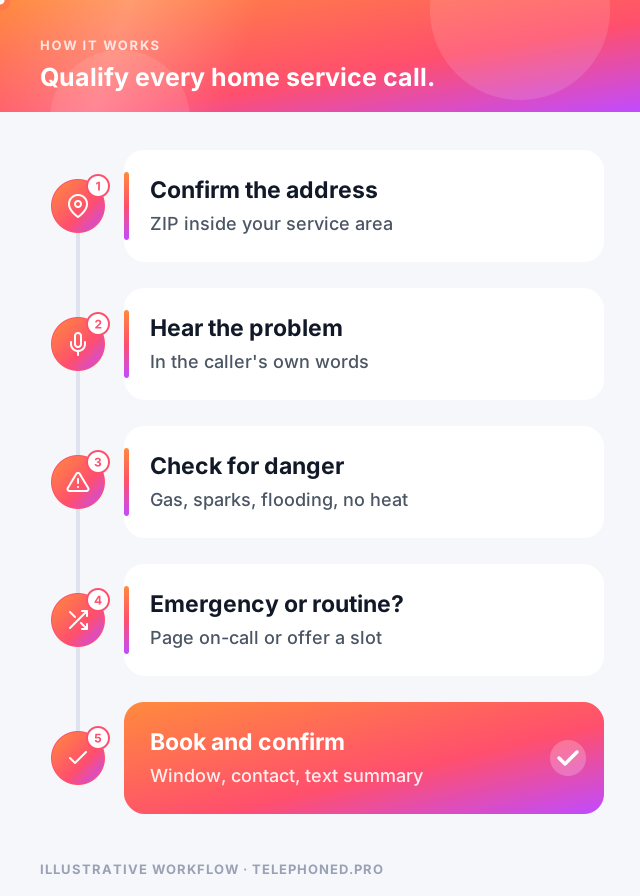
Order changes outcomes. Ask about price or ownership too early and urgent callers feel stalled; ask about safety too late and you risk a real hazard. The flow below works for most trades, and it is the same structure we use in our call script templates.
Bring one real scenario to your demo. We will review the intended next step, existing systems and human handoffs.
Secure your spotSome calls are not leads first; they are safety calls. PHMSA's guidance for anyone who smells gas is to leave the area on foot, avoid anything that could make a spark, and call 911 and the gas company from a safe place. Your receptionist, human or AI, should say that before asking a single sales question, then alert your on-call tech.
“On an urgent call, the first question is never ‘what's your budget?’ It's ‘is everyone safe?’”
Picture an HVAC company in Columbus on the first cold night of November. At 9:40 p.m. a caller says the furnace stopped and the house is at 58 degrees. The receptionist confirms the ZIP is in the service area, asks whether anyone smells gas (no), and whether anyone at home is especially vulnerable to cold (a newborn). That answer makes it priority under the owner's rules, so the on-call tech gets a text summary with the address, the furnace's age and a callback number, and the caller hears exactly what happens next.
A second caller wants a quote for a new AC system next spring. Same opening questions, different path: it is not urgent, the caller owns the home, so the receptionist books a daytime estimate slot and sends a confirmation. Nobody was woken up for a sales appointment.
Clear answers build trust in the other direction too. The FTC tells homeowners to check that contractors are licensed and insured and to get a written contract. A receptionist that can say “our license number is on our website” and “you'll get a written estimate before any work starts” answers those worries before the caller hangs up and keeps shopping.
Get these right and qualification stops feeling like a script. Callers get a quick, confident answer, techs arrive with what they need, and your calendar fills with jobs you actually want.
Keep reading
Bring one real workflow. We will show you how calls, follow-up and scheduling could connect for your business.
Keep exploring
The services and decisions that connect to this page.