US business call workflows
AI receptionist for physical therapy practices
with a clear next action.
An AI receptionist for physical therapy practices supports administrative call intake, appointment requests and routing to your front desk. Telephoned.pro scopes the workflow around approved questions, scheduling rules and verified supported connections. Clinical assessment, treatment advice, coverage decisions and urgent patient concerns stay with your qualified staff. Privacy and account requirements must be reviewed before any patient information is connected.
Review AI Automation for Healthcare Clinics. A related guide to check alongside this page is AI Receptionist for Dental Practices: Answer & Book 24/7.
Workflow review
Keep administrative intake separate from clinical judgment
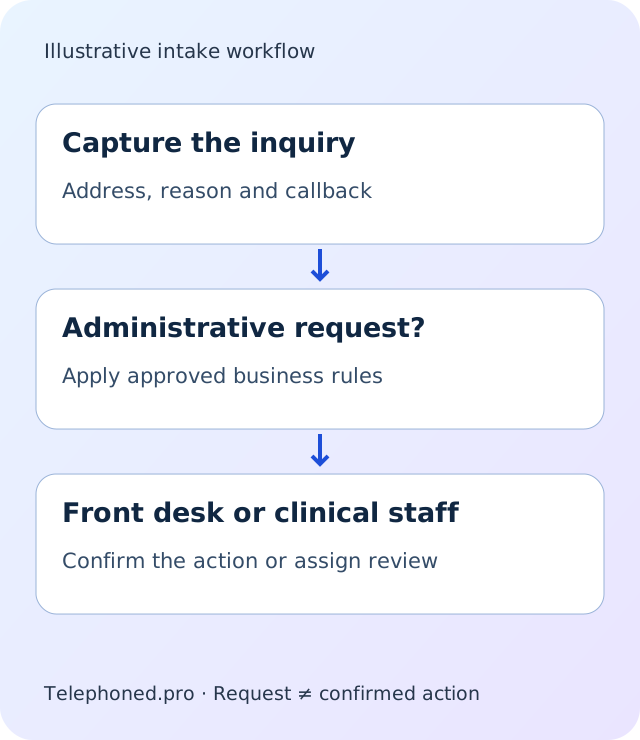
Illustrative scenario: a prospective patient calls while the front desk is helping someone in the clinic. The person wants to ask about starting physical therapy and appointment availability. The assistant can capture the approved administrative request and route it to the appropriate next step. It should not determine whether therapy is appropriate, interpret symptoms or promise an insurance outcome.
An existing patient rescheduling a visit needs a different path from a new referral inquiry or a clinician requesting records. Identify the purpose before collecting details. Your practice decides which information is appropriate for routine intake and which needs staff review. A general phone-answering setup does not establish that a particular patient-data workflow is suitable or compliant.
Workflow review
Design the physical therapy appointment-request flow
Begin with a clear greeting and the approved contact and callback details. Establish whether the caller is new to the practice or asking about an existing appointment. Use only the questions your practice authorizes for administrative routing. Do not ask the assistant to perform a clinical evaluation or gather an unrestricted medical history to make a scheduling decision.
Check the relevant location and appointment category. An initial evaluation, follow-up visit and question for a therapist can have different scheduling requirements. Referral, authorization or other prerequisites may need staff confirmation. Where a requirement remains unresolved, capture the request and assign it for review instead of implying that the patient has been cleared to attend.
A confirmed appointment requires the actual calendar action to succeed under the practice's rules. A preferred time, a pending callback and a booked visit must remain distinct in the caller's explanation and internal record. If the connection fails or the request does not match an approved path, the front desk needs ownership of the exception and enough context to continue appropriately.
Your call flow
Review a normal request and an exception
Bring your current tools and operating rules. We will distinguish confirmed actions from requests that need your team.
Workflow review
Route care questions and urgent concerns to staff
A patient may begin with an administrative question and then describe pain, a new symptom or a concern about treatment. Your practice supplies the approved response and escalation process. The assistant should not diagnose, recommend exercises, interpret a therapist's instructions or decide how urgently a clinical issue needs assessment. Its role is to preserve the request and reach the appropriate human path.
Define what happens when that staff member cannot answer. The fallback should follow the practice's approved instructions, including any emergency wording it requires. An unanswered transfer is not a clinical review. Avoid suggesting that a care team has received or acted on a message unless that event is confirmed. Make the next action and its owner explicit without offering unsupported reassurance.
Review this workflow with your team.
Bring one routine request and one exception. Review existing-number forwarding where supported, plus AI transparency.
Workflow review
What to check before choosing a practice receptionist
Bring the administrative call categories, locations, appointment types and staff handoff rules you want to review. Identify which requests can be booked directly and which require an authorization or referral check. Confirm who maintains those instructions. The team should be able to explain why a request is booked, queued or escalated without relying on the assistant's judgment about care.
Use fictional patient details to test a new inquiry, an existing appointment change, a coverage question and a caller asking for clinical advice. Add an unavailable calendar and an unanswered staff transfer. Inspect the resulting record and the caller-facing explanation. Check that no coverage decision, treatment recommendation or appointment confirmation was invented.
Before discussing real data, review the proposed information flow, access, retention and account requirements. Supported scheduling connections must be verified for the exact actions involved. This page does not make a HIPAA or business-associate-agreement claim. Review the published privacy and data-processing documents and confirm any additional requirements directly before a patient-data workflow is implemented.
Workflow review
Begin with a bounded administrative workflow
A practice can evaluate a limited intake or overflow workflow while staff retains care decisions and exceptions. Define the administrative outcome you want to check: an owned callback, a verified scheduling action or a correctly routed question. A captured conversation is not evidence of a completed appointment, treatment outcome or revenue improvement.
Keep follow-up aligned with current appointment status and the practice's communication rules. A patient who has already rescheduled should not receive an unchanged reminder for the old visit. A request for a therapist should not become another new-patient sequence. Reconciliation and stop rules belong in the review alongside the initial conversation.
Bring an ordinary administrative inquiry and a difficult exception to discovery. We can discuss what should be collected, what should remain with staff and which connections need validation. Use the demo to clarify the scope and responsibilities before considering access to live systems. Privacy, clinical authority and scheduling prerequisites remain part of that decision, not assumptions made by the marketing page.
Before you decide
Questions about the proposed setup
Clinical assessment and treatment advice stay with qualified staff. The proposed administrative workflow should route those questions through practice-approved instructions.
Coverage or authorization decisions need the practice-approved verification process. The assistant should not infer eligibility from a phone conversation.
No. Those requirements must be confirmed directly before connecting patient information. Review the published privacy and data-processing documents as part of discovery.
Want to hear it on your own calls?
Secure your spotReview the workflow
around your business.
Bring a typical call and one exception. We will explore the right scope, dependencies and staff handoffs before you decide.
Related service and decision guides
Choose the specific call flow or buying question you want to review, including scheduling boundaries and staff responsibilities.
- AI receptionist for medical practices
An AI receptionist for medical practices can support a scoped administrative intake and staff-routing workflow.